Sliding gates
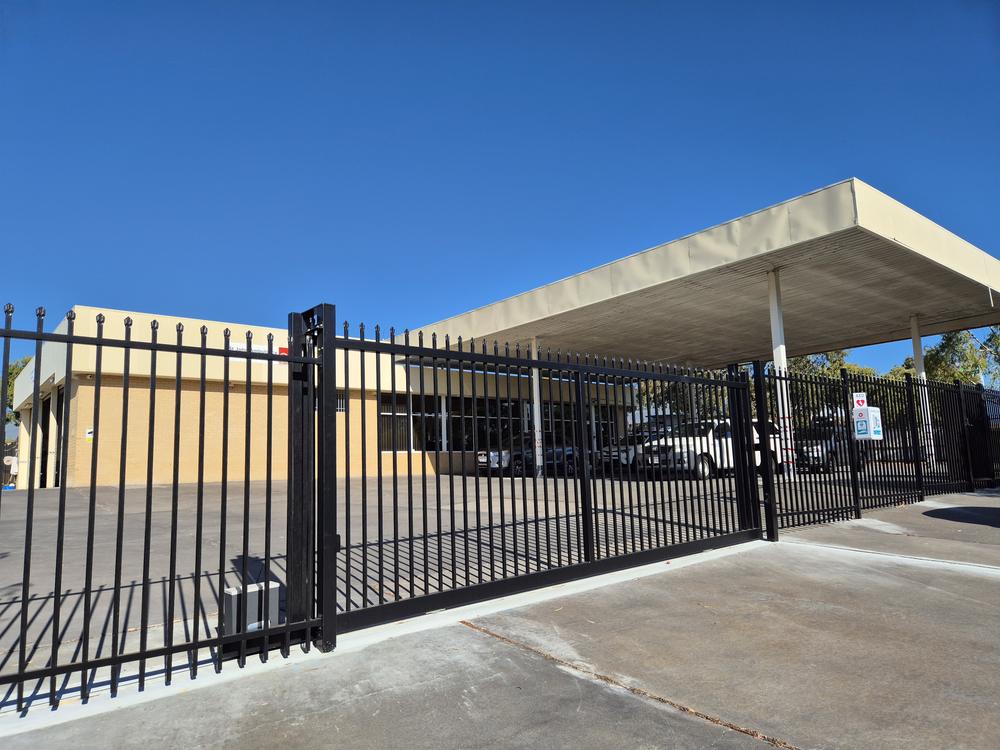
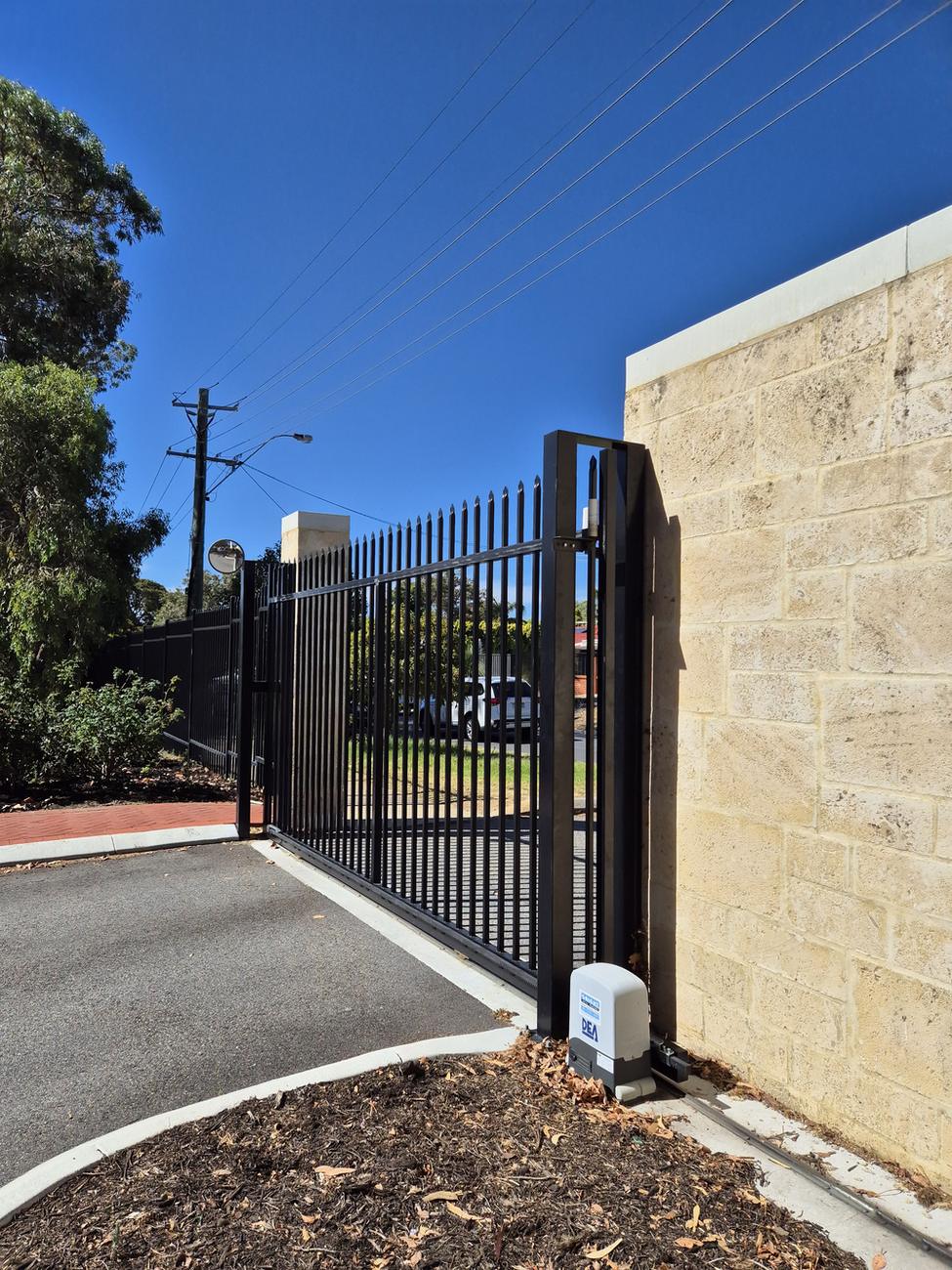
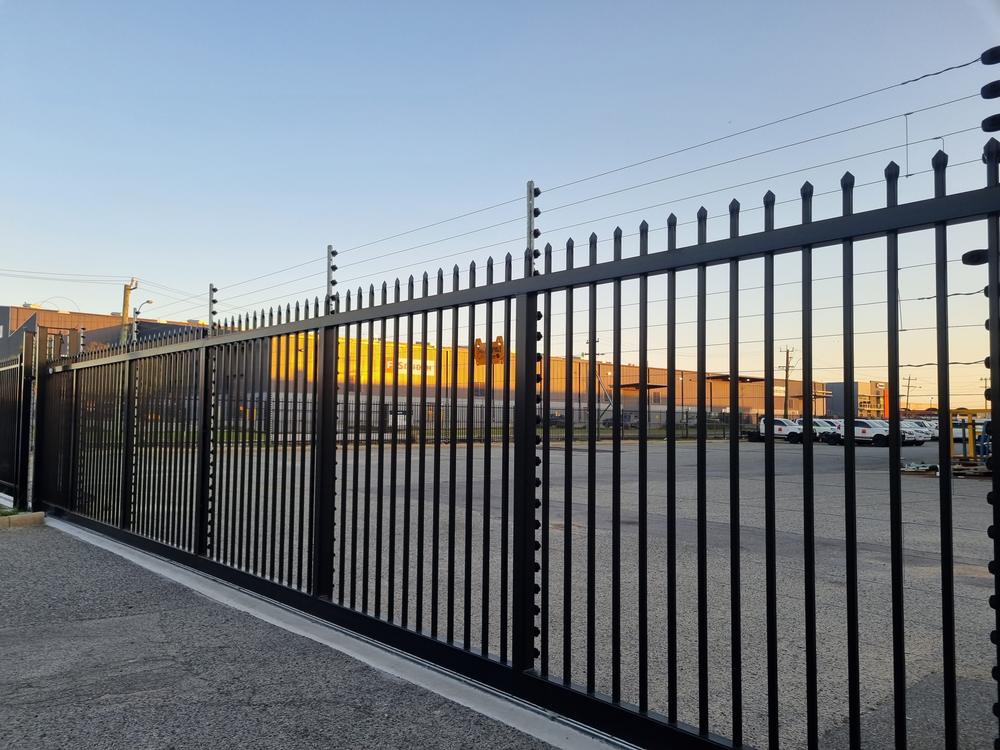
Track or cantilever sliding gates for wide vehicle entries, including bi-parting pairs up to 18 m.

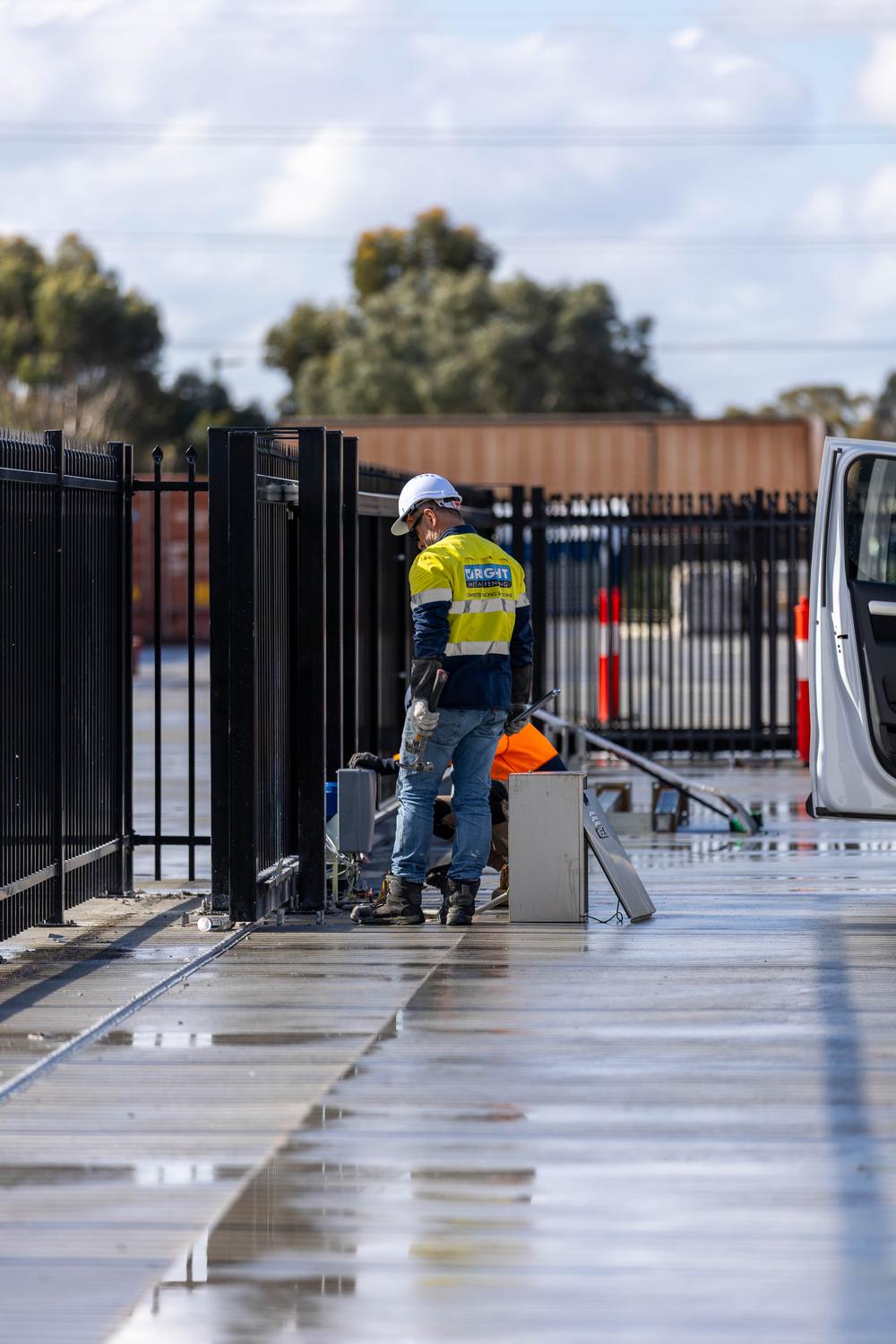
Swing, sliding and cantilever gates fabricated to match your fence, then motorised, fitted with safety devices and commissioned by our gate and automation technicians.
Every gate is fabricated in our workshop to match the fence it sits in, whether that's Garrison, palisade, chainmesh, slat or blade.
Track or cantilever sliding gates for wide vehicle entries, including bi-parting pairs up to 18 m.
Single and double swing gates for vehicle and pedestrian access, manual or automated.
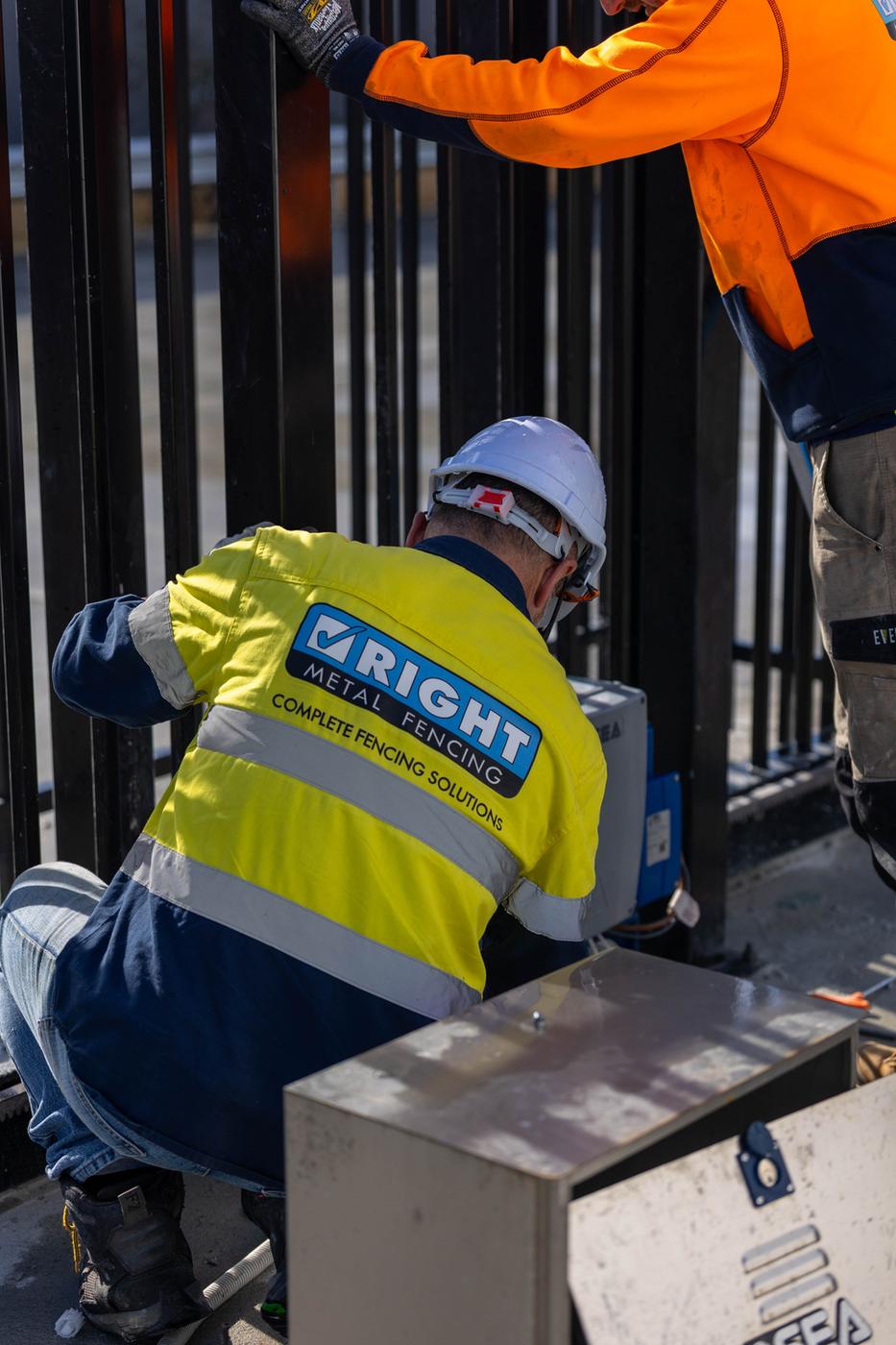
Boom gates for car parks and logistics sites, plus pedestrian gates with electric locks and push-to-exit.
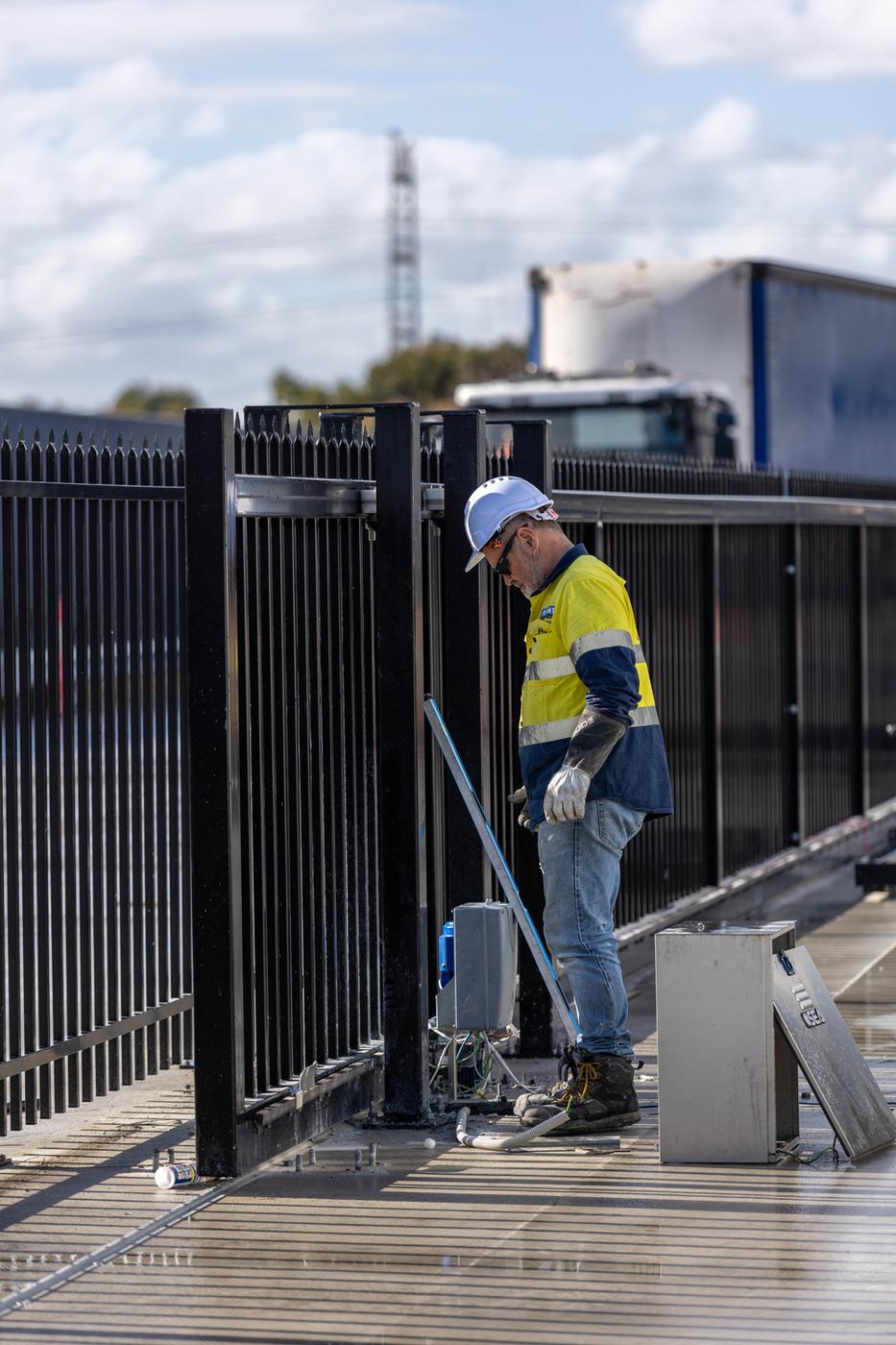
We size the motor to the job so it lasts. We look at four things:
Our standard is Roger Automation operators, rated for continuous (100%) duty, for sliding, swing, heavy-duty and pedestrian gates and boom barriers. Where the site, the project specification or your preference calls for another brand, we'll install that instead.
Every automated gate we install comes with photo-electric safety beams and is commissioned and tested on site.
How we build a sliding gate is the reason they keep running for years. These details are standard on every gate we make.
Frame sections chosen for the gate's span and the loads it'll see in use, not a one-size-fits-all rail. A wider or heavier gate gets a heavier frame, so it doesn't rack or sag over time.
Guide posts built from 100 × 100 × 3 mm SHS joined with 10 mm flat bar, with the number set by gate length: single post under 9 m, double over 9 m, triple over 12 m. The gate can't be lifted off the track or away from the motor, which keeps intruders out and the gate safely captured.
Concrete plinths and footings sized to the gate and ground conditions, not a standard pour regardless of load. It's what keeps posts standing square years after installation.
Every sliding gate gets dual stops, a bolt-down in the open position and a double catch post at the end. It's our signature design: plenty have copied it since, but we started it.
A minimum of two roller brackets on every gate, where many installers skimp and fit one.
Premium ball-bearing rollers with rubber O-rings, in black. They run smoother, don't mark the gate and need less maintenance than cheap white nylon rollers that bind.
High-quality track and clearance wheels in black, so the gate runs well and looks sleek.
Fitted to every automated gate we install, as required, and tested at commissioning.
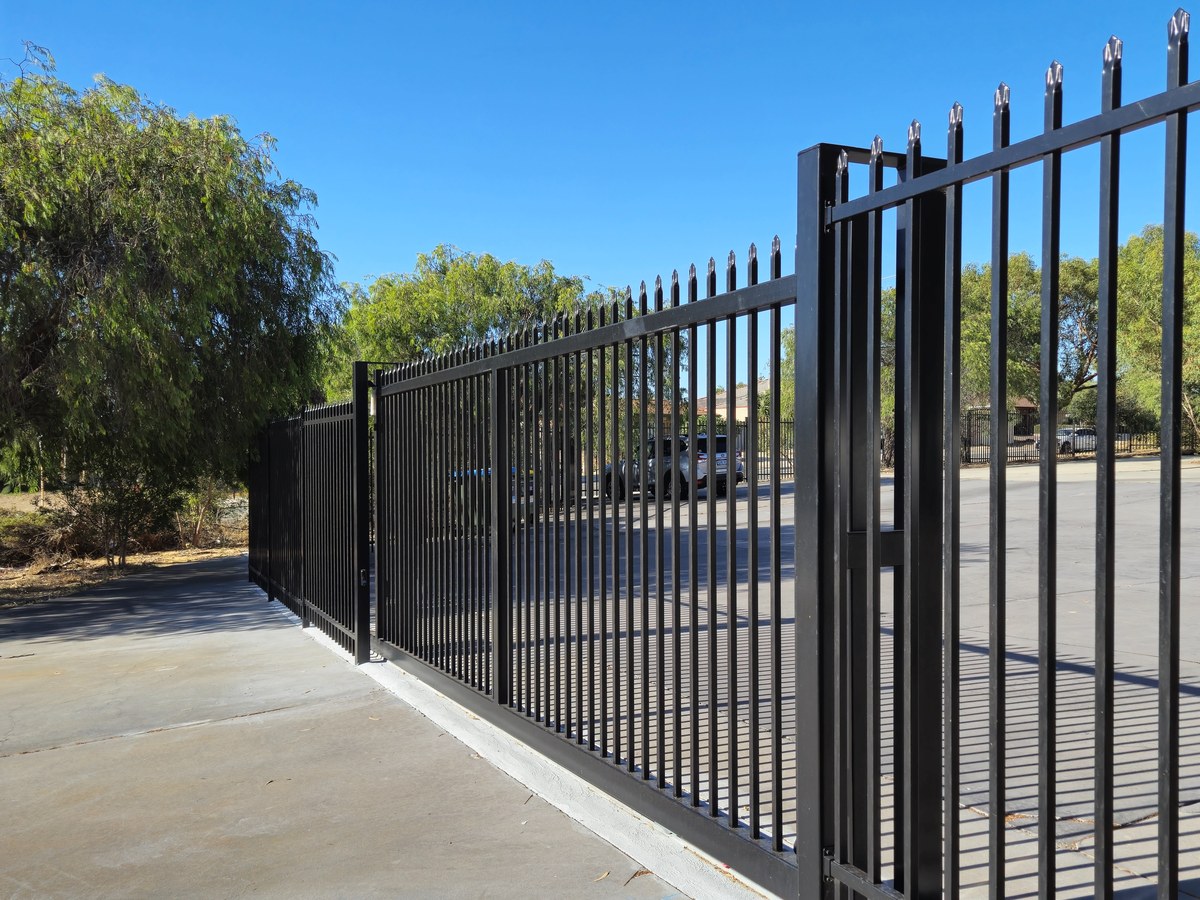
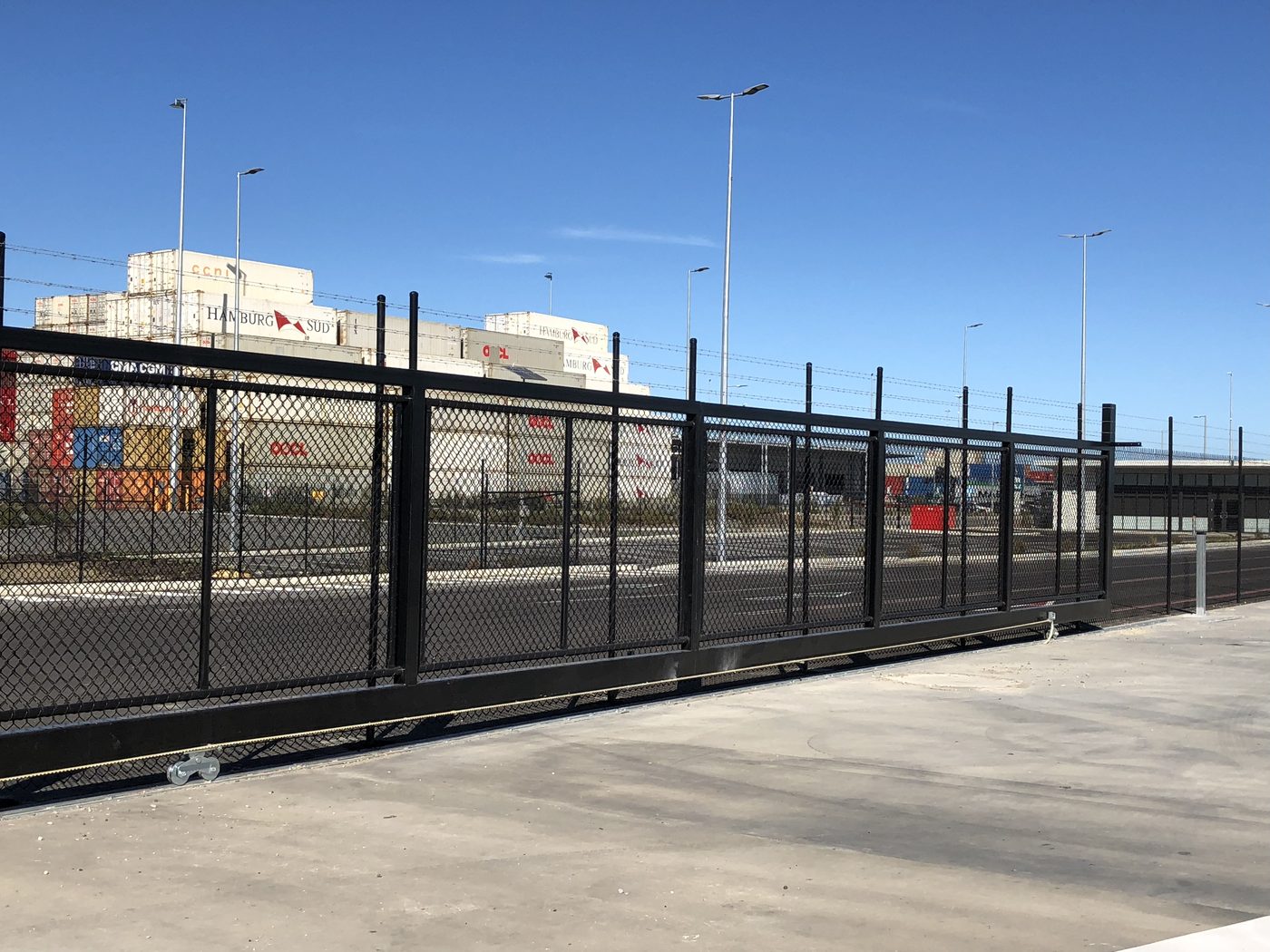
One of our sliding gates, over 23 m long, has been running at a container holding yard near Fremantle Port since 2017, installed for Kerman Contracting. A truck has hit the posts since, and they're still standing. We've never had a callout for it.
We fit Roger Automation operators as standard because they're built for commercial duty and easy to support for years after install.
Italian-made brushless motors rated for intensive, continuous use, so a busy logistics entry or school gate doesn't wear them out.
An onboard encoder tracks exactly where the gate is, so it slows down at the same point every cycle instead of drifting over time.
Programmable soft starts and stops take the shock out of every cycle, which protects hinges, rollers and the gate itself.
Low-voltage motors with battery backup options, so the gate still works when the power's out.
Wi-Fi modules let us program, monitor and update the controller without a site visit.
Sliding gates up to 2,200 kg, swing gates with leaves up to 7 m, underground swing motors, pedestrian gate operators and boom barriers up to 8 m.
Safety is designed in from the start, then checked at handover and at every service. We recommend a full inspection every six months. Gate servicing →
We look at who uses the gate, where people and vehicles cross, and what could be caught, crushed or struck.
Photo-electric beams on every automated gate, plus safety edges or other sensors where the risk calls for it.
Gates designed for local wind loads, with guides, rollers and stops that handle daily use.
Sliding gates captured by heavy guide posts with dual stops, and swing gates hung on three hinges or fitted with a safety cable.
Electrical work to AS/NZS 3000.
An accessible emergency release, and handover training so your staff know how to use it.
Add the access, safety and power options your site needs. We supply, install and commission them with the gate, and service them afterwards.
Handheld transmitters for staff, contractors and regular visitors.
PIN entry on a post or pedestal, including slim and glass-touch models.
Swipe cards and tags, or integration with your building's access control.
Open and manage gates from a phone app or call, including long-range radio links where there's no Wi-Fi or mobile signal at the gate.
Push-to-exit and hands-free exit buttons for staff and visitors.
Detector loops cut into the driveway for free exit and hold-open safety.
Radar sensors with configurable virtual loops, an alternative to cutting loops into the slab.
Battery-powered buried or surface-mount sensors where cutting loops isn't practical.
Magnetic probes that open the gate as vehicles approach from inside.
Fitted as standard on every automated gate we install, with anti-vandal covers available.
Pressure-sensitive edges, wired or wireless, that stop and reverse the gate on contact.
Laser scanners for boom gates and high-traffic industrial entries.
Flashing amber lights while the gate is moving.
Keeps the gate running through power outages, so staff aren't locked in or out.
Solar panel kits for sites without mains power, common on regional and remote sites.
Automatic openers for pedestrian and accessible gates.
Motorised drop bolts and electric locks for extra security when closed.
Keep the gate open during business hours, then secure it after hours.
…within 1.5 weeks came in to install the gate and the fence in the middle of heavy rain and they just kept going making sure their job is finished on that day. Left the site perfectly tidy and making sure everything does work before leaving.
David Gee★★★★★ Google review